As the energy transition continues in Europe, new technologies, fuel sourcing and advanced digital solutions are helping to generate long-term value and enable customers to meet their sustainability targets. This is particularly relevant in Europe, where roughly 40% of the electricity distribution grids are more than 40 years old and were built for fossil fuels.1 This means that decarbonising power in the region relies heavily on modernising and replacing existing infrastructure, as well as increasing the use of energy from renewable sources.
Despite the surge in renewables and electrification, global emissions are not falling fast enough to meet climate goals. While decarbonisation continues to have a positive impact, it’s increasingly shaped by competing pressures: AI and data centre power demand, geopolitical realignment, ageing infrastructure and fragmented trade policies across countries and regions. Over the next two decades, as companies, governments and the public sector work towards achieving net zero emissions, the key trends impacting decarbonisation include the introduction of new technologies, energy market dynamics and imbalances between supply and demand.
Emerging decarbonisation technologies
In the energy sector, new technologies are quickly moving from research and development to deployment. Technologies at different stages of maturity, including long-duration energy storage, CO₂ capture and utilisation, AI-enabled grid management, natural hydrogen and, over the longer term, nuclear fusion, could contribute to reducing emissions. It’s integral that such technologies are matched with intelligent energy solutions, such as capturing waste heat from data centres and using it to heat homes. Data centres, in particular, are putting strains on energy grids, with power demand projected to climb roughly 17% in 2026 and 14% a year through 2030, pushing potential global demand past 2,200 TWh, comparable to India’s total electricity consumption.1
Energy providers are looking at long-duration energy storage, using batteries and other storage systems designed to hold power for many hours or days, as a critical support mechanism for power grids and renewables. Grids are benefiting from AI optimisation and machine learning, which improve efficiency and draw more performance out of ageing infrastructure. The focus here is on forecasting renewable generation, managing demand, predictive maintenance and improving grid reliability. Digitalisation extends to buildings and construction, with smart building technologies, industrial sensors and real-time energy management systems reducing emissions and offering energy savings on existing assets.
On the fuel source side, geothermal energy is attracting increased interest as a source of reliable, dispatchable low-carbon energy, while investment is also increasing in flexible generation and storage technologies. Nuclear fusion remains a potential long-term source of low-carbon energy, although commercial deployment is still uncertain. Small modular reactors and advanced nuclear technologies are also attracting increasing interest from data centre operators seeking reliable low-carbon electricity.
Energy market dynamics
Across Europe, flexibility is becoming as valuable as energy generation itself. The ability to store, shift and optimise energy use is turning into a stronger competitive lever than simply adding more clean power to the grid. Clean power continues to increase its share of European electricity generation, but prices, security and industrial competitiveness remain under pressure. Coal power hit a historic low of 9.2% in 2025, with 19 EU countries below 5% of coal usage.2 Renewables now provide 50% of total EU electricity generation, with solar the biggest driver, and this is expected to continue to increase.3
European wholesale electricity prices are projected to fall by an average of 26% by 2030, compared to 2024 levels, if the EU hits its solar and wind deployment targets.4 European gas demand is expected to fall a further 2% in 2026, as renewables continue displacing gas from power generation.5 The EU’s answer to market volatility and fragmentation is the Grids Package, introduced in 2026, aimed at building a more deeply integrated single European energy market with better cross-border infrastructure, more interconnected systems and sharing flexibility between countries.
Supply and demand
On the global level, electricity demand and clean-power infrastructure are under real strain, with power demand accelerating rapidly. China’s electricity demand growth is set to hit 5.5% in 2026 (up from 5.2%), while India is projected to rebound to 7% (up from 1.6% in 2025).6 This demand is driven by manufacturing activity, electric vehicle charging and data centres. Geopolitical instability in the Middle East remains a source of uncertainty for oil and gas markets, and it could affect energy prices and investment decisions, influencing baseline forecasts in either direction – supporting oil prices or accelerating the shift to alternative fuel sources.
Importantly, lower oil and gas prices are no longer slowing the energy transition and the trend towards decarbonisation, as funding in electrification, renewables and power infrastructure has not halted. Investment is increasingly flowing into power infrastructure, grid capacity and flexible generation, with the bottleneck shifting from “how much energy exists” to “can the grid deliver it fast enough.” With energy infrastructure delivered as-a-service by a provider such as GETEC, businesses benefit from effective and reliable energy solutions without the need for upfront expense.
The road to net zero
Achieving Europe’s climate-neutrality objective by 2050 remains the real challenge. An estimated 70% of the technologies needed to hit net zero are not reaching the required maturity to scale up in time, specifically for decarbonising aviation, shipping and heavy industry.7 Modelling and forecasting experts are increasingly framing 2050 decarbonisation as inseparable from Europe’s broader economic competitiveness. Energy costs remain an obstacle for European industry, as strategy planners push for more cost-optimised pathways rather than transition-at-any-cost approaches.
Decarbonisation is evolving to become a set of competing pressures reshaping energy at every level, including technology, markets and geopolitics. Additionally, climate policy, grid capacity, system integration and flexibility are becoming increasingly important constraints on decarbonisation. In the coming decades, generating clean energy needs to be combined with grids and flexible infrastructure that can deliver and balance the energy fast enough. That single bottleneck is therefore becoming a defining factor in the pace of the energy transition.
As Europe’s leading specialist for reliable, decarbonised energy and infrastructure, GETEC is committed to empowering the success of our customers with cost-effective energy solutions, to drive the energy transition and achieve climate neutrality. GETEC enables companies in energy-intensive industries to gain access to decarbonised technologies, benefit from sustainable fuel sources and generate added value through digital innovation.
Lorem Ipsum
Breakthrough materials for inert anodes and alternative binders are being funded in the EU to decarbonise heavy industry, such as steel and cement, at the process-chemistry level.
Lorem Ipsum
Carbon capture and utilisation (CCU) projects enable captured CO₂ to be used as a feedstock for products such as chemicals and materials, providing an alternative utilisation pathway to geological storage.
Lorem Ipsum
Virtual power plants aggregate and coordinate distributed energy resources such as batteries, electric vehicles and flexible loads, helping balance supply and demand.
Lorem Ipsum
Smart building technologies, industrial sensors and real-time energy management systems improve energy efficiency and reduce emissions before new capital is spent.
Lorem Ipsum
Global energy and natural resources investment hit a record US$1.63 trillion (€1.45 trillion) in 2025, and renewables investment alone hit US$675 billion (€598 billion).8
Decarbonisation technologies
Electrification and a diversified energy mix driven by new decarbonisation technologies enable customers to meet sustainability and net-zero targets while securing a reliable energy supply.
Securing the right energy sources
The fuel source advantage is the ability to secure the right energy sources at the right price, quality and reliability, through strong procurement, supplier networks, market expertise and fuel flexibility.
Digital innovation furthers decarbonisation
Connectivity and digital tools deliver improvements in efficiency, optimisation and verification, such as with digital twins, predictive maintenance, real-time monitoring and demand response systems.
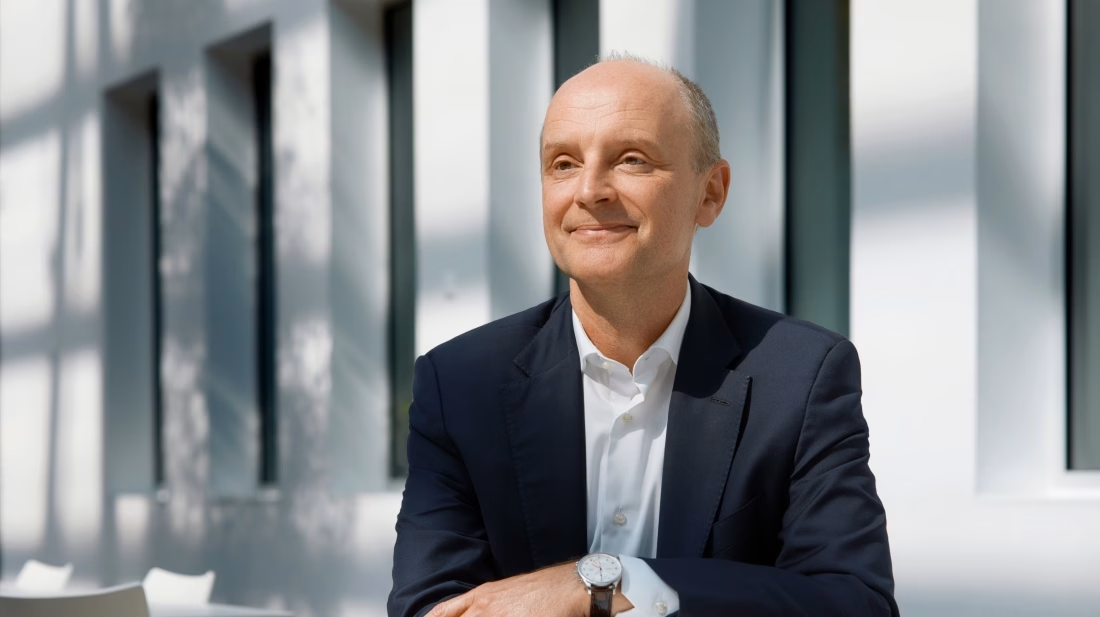
By taking a holistic approach to achieving climate targets, ensuring security of supply and keeping energy affordable, GETEC is building the energy infrastructure of the future.
CEO
GETEC
FAQ
What are the current trends in the energy industry?
Electricity demand is surging (data centres, electric vehicles, manufacturing, and household use), while renewables continue to gain a share of energy generation. Grid infrastructure is becoming the key bottleneck. Some fossil-fuel markets are experiencing relatively ample supply even as clean power investment tries to keep pace, and geopolitics (Russia-EU gas, Middle East tensions) adds volatility.
Why are some energy prices falling?
Prices in some fossil-fuel markets can decline when supply growth exceeds demand, although trends vary significantly by fuel and region. However, this doesn’t apply to the sector as a whole. Renewables investment, electricity demand and grid spending are all growing.
What are the future trends in the electricity industry?
The current trends are electric vehicles, the electrification of heating and industry, and rising demand from AI. There is also a strong shift toward flexibility (storage, demand response, virtual power plants) as the share of renewables grows. Further trends include grid modernisation, cross-border integration and emerging low-carbon generation to complement variable energy from renewable sources.
Is energy a growing industry?
Global investment in energy and natural resources hit a record US$1.63 trillion (€1.45 trillion) in 2025, and electricity demand is growing fast.8 Growth is uneven by segment: fossil fuel commodity markets are largely declining in price, while power infrastructure, renewables and grid investment are expanding.
What type of energy will dominate in 2050?
Electricity is expected to be the dominant final-energy carrier, reaching an estimated 60% of final energy consumption in EU net-zero scenarios,9 generated overwhelmingly (94–96%) from carbon-free sources.10 This includes wind and solar, supplemented by nuclear, hydro and storage. Low-carbon hydrogen and hydrogen-derived fuels could help decarbonise hard-to-electrify applications in sectors such as heavy industry, shipping and aviation.
- Kramarchuk R, d’Avack F. Horizons top trends 2026 [Internet]. New York, NY: S&P Global; 9 December 2025. Available from: https://www.spglobal.com/energy/en/news-research/special-reports/energy-transition/horizons-top-cleantech-trends-2026 [accessed 11 November 2026].
- Eurostat. Record low coal share in EU electricity production [Internet]. Luxembourg: Eurostat; 13 August 2026. Available from: https://ec.europa.eu/eurostat/web/products-eurostat-news/w/ddn-20260813-1 [accessed 11 November 2026].
- Goyal K. Renewables account for 50% European electricity in 2025 [Internet]. REGlobal; 28 August 2026. Available from: https://reglobal.org/renewables-account-for-50-european-electricity-in-2025/ [accessed 11 November 2026].
- Navia Simon D, Diaz Anadon L. Power price stability and the insurance value of renewable technologies. Nat Energy [Internet]. 2025 Jan 28. doi:10.1038/s41560-025-01704-0. Available from: https://www.nature.com/articles/s41560-025-01704-0 [accessed 11 November 2026].
- IEA. Executive summary. In: Gas market report, Q3-2026 [Internet]. Paris: International Energy Agency; 2026. Available from: https://www.iea.org/reports/gas-market-report-q3-2026/executive-summary [accessed 11 November 2026].
- IEA. Executive summary. In: Electricity mid-year update 2026 [Internet]. Paris: International Energy Agency; 2026. Available from: https://www.iea.org/reports/electricity-mid-year-update-2026/executive-summary [accessed 11 November 2026].
- ENGIE. Decarbonization pathways for Europe through 2050: ENGIE’s scenario [Internet]. Courbevoie: ENGIE; 7 November 2024. Available from: https://www.engie.com/en/explore/news/decarbonization-pathways-for-europe-through-2050-engies-scenario/ [accessed 11 November 2026].
- Flowers S. Five themes shaping the energy world in 2026 [Internet]. The Edge. Edinburgh: Wood Mackenzie; 8 January 2026. Available from: https://www.woodmac.com/blogs/the-edge/five-themes-shaping-the-energy-world-2026/ [accessed 11 November 2026].
- European Commission, Directorate-General for Climate Action. Electricity- and hydrogen-driven energy system sector-coupling in net-zero CO2 emission pathways (van der Zwaan et al., 2025) [Internet]. Brussels: European Commission; 30 April 2025. Available from: https://ec.europa.eu/newsroom/clima/redirection/item/881033 [accessed 11 November 2026].
- Tsiropoulos I, Nijs W, Tarvydas D, Ruiz Castello P. Towards net-zero emissions in the EU energy system by 2050: insights from scenarios in line with the 2030 and 2050 ambitions of the European Green Deal [Internet]. EUR 29981 EN. Luxembourg: Publications Office of the European Union; 2020. JRC118592. doi:10.2760/081488. Available from: https://publications.jrc.ec.europa.eu/repository/bitstream/JRC118592/towards_net-zero_emissions_in_the_eu_energy_system_-_insights_from_scenarios_in_line_with_2030_and_2050_ambitions_of_the_european_green_deal_on.pdf [accessed 11 November 2026].