Providing proven technologies, digital innovation and a fuel source advantage for high-energy industries
The decarbonisation challenges for industry cut across financing, production methods, regulations, infrastructure and technology. Heavy industries account for an estimated 70% of global industrial CO₂ emissions.1 Compared to other sectors, these industries face challenges with decarbonisation, due to high baseloads, process heat requirements and a dependency on specific fuel types. Regulatory pressure and rising energy costs are also pushing these industries to transition to sustainable energy and infrastructure.
For electricity, there are alternatives and a clear technology path, while transport has viable consumer-facing options, such as electric vehicles. Energy-intensive industries face chemistry constraints, immature technology, high costs and competitive pressures. There is also the key difference between process emissions and energy emissions. Many industrial emissions come from the chemistry of production processes. Power and transport are almost entirely energy-emissions problems, while industries need a different chemistry or carbon capture.
These processes require high temperatures and often run as 24/7 operations. Kilns, furnaces and crackers are heated to 1,000°C or more, and when they run around the clock, stopping them is costly or damaging. This is why industries need reliable, always-on clean energy, and not intermittent supply. However, the technological solutions that can help energy-intensive industries are not yet mature enough at scale and also depend on new infrastructure. As a coordination risk, businesses are reluctant to invest in one solution without confidence in the others.
With industrial plants expected to last 30-50 years, investment timing and decision-making matter in the short and long term, and low-carbon products tend to cost more. In some cases, regulations are causing high-energy industries to relocate to regions with weaker climate policies, which is known as carbon leakage. In terms of infrastructure gaps, grids, hydrogen networks, renewables and CO₂ pipelines all lag behind the current demand. The energy transition is also being slowed by technologies that are still at the prototype or demonstration stage, and not ready for widespread use.
Companies in energy-intensive industries have the added concern that products traded on competitive international markets already have very slim margins, meaning they are unable to justify elevated production costs or adopt expensive new technologies. The effort to overcome the various decarbonisation challenges is currently not extensive enough to reach net-zero emissions by 2050. Decarbonisation requires a widespread technology and policy response that covers innovation, infrastructure, production, logistics and supply chains. Businesses need decarbonised solutions, lower-carbon fuels and digital technologies, from a reliable provider such as GETEC, to ensure continuity of energy supply, reduced emissions and long-term energy efficiency.
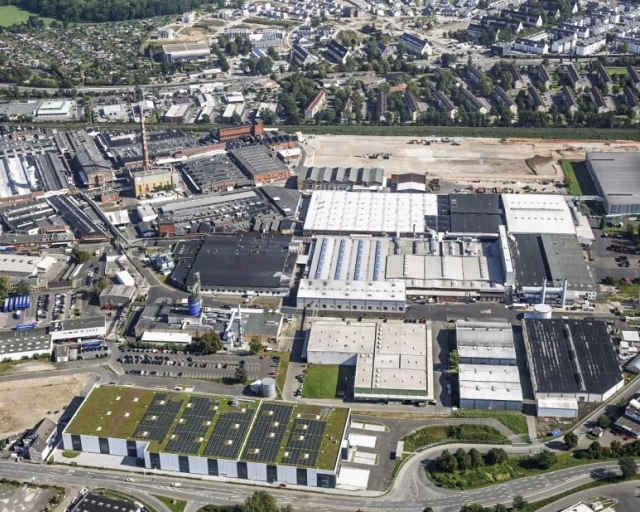
A good example is the solution GETEC provided for Goodyear in Germany. The new biomass heating plant provides up to 95% of the heat required for production, with the fuel for the plant including locally sourced residual wood and forest waste. This has reduced CO₂ emissions by up to 95% per year.
Cutting demand and maximising efficiency
On the energy side, emissions continue to rise. Globally, energy-related CO₂ emissions reached a record of more than 38 Gt in 2025, around 0.4% higher than in 2024 and 5% above 2019 levels.2 Industrial production accounts for 40% of global energy demand.3 To reduce emissions, high-energy industries can start by cutting demand and maximising efficiency and heat recovery.
A further step is to electrify processes that require low- and medium-temperature heat, such as with heat pumps and electric boilers, and to shift to biomass or renewable fuels where the supply allows. As retrofitting an asset in mid-life is costly, investment timing should be matched to an asset’s reinvestment cycle.
As a leader in energy and infrastructure solutions, GETEC enables companies in energy-intensive industries to gain access to decarbonised technologies, benefit from sustainable fuel sources and generate added value through digital innovation. New technologies enable processes, production and energy systems to deliver the same output while reducing CO₂ emissions, compared to conventional fossil fuels. These technologies include electric furnaces, boilers and heat pumps, biomass and biofuels, and carbon capture systems.
Switching to alternative fuels also helps to reduce emissions and ensure cost stability, as fossil fuels have carbon price risks and volatile pricing. Alternative fuels provide flexibility where electrification is not yet fully viable, such as retrofitting infrastructure with a renewable fuel mix for a lower capital cost and reduced emissions. Through energy digitalisation, companies can track use, emissions and resource consumption in real time across buildings, factories, vehicle fleets and supply chains. This connectivity, combined with data analysis, helps to turn emissions goals and sustainability strategies into concrete, actionable data.
Taking decarbonisation further with technologies, fuel sources and digital tools
New power generation technologies are enabling customers to decarbonise industrial processes and reduce emissions. Solid biomass combustion uses materials such as wood chips, pellets or agricultural residues as fuel in boilers to generate heat or steam. Combined heat and power (CHP) plants offer further efficiency gains, as the waste heat is used. Waste-to-energy incineration involves burning municipal or industrial waste, with the heat producing steam for electricity and heating.
Solar technologies are also becoming more widespread and technically ready. Concentrated solar power uses mirrors to focus direct sunlight onto a receiver, heating a fluid that drives a conventional steam turbine. Photovoltaic conversion has semiconductor cells that convert sunlight directly into electricity via the photovoltaic effect. It is considered one of the world’s cheapest sources of new electricity, helping to make industrial electrification viable. Solar thermal collection captures the sun’s heat rather than making electricity. Flat-plate or evacuated-tube collectors warm water or another fluid for hot water, space heating, district heating or industrial process heat.
Energy conversion and thermal technologies are also helping decarbonisation of high-energy industries. Anaerobic digestion uses microorganisms to break down wet organic materials in sealed, oxygen-free tanks to produce biogas that can be burned in boilers for heat, used in gas engines or turbines for electricity, or in CHP units. Electric resistance heating passes an electric current through a resistive element (metal or ceramic), which heats up and transfers heat by conduction, convection or radiation. Nearly all the electricity becomes heat, so efficiency at the point of use is close to 100%, and it can reach high temperatures (well above 1,000°C) while producing no on-site combustion emissions.
Power-to-heat is the larger-scale version of resistance heating, designed for grid interaction. Electric boilers use immersed resistance elements or electrode boilers, where current passes directly through water to generate steam at a very high efficiency. When paired with thermal storage, such as hot water tanks, it turns cheap, variable electricity into stored heat. Waste heat recovery captures the heat from hot exhaust gases, cooling water or hot products for reuse, using heat exchangers and recuperators.
On the fuel source side, fossil fuel combustion, such as natural gas, is backed by mature technology and existing supply infrastructure. New alternatives seek to replace combustion fuels while maintaining a secure energy supply and filling the gap where electrification struggles. These fuels include green hydrogen, blue hydrogen, ammonia, biomethane and biogas, solid biomass and biochar, waste-derived fuels, liquid biofuels and renewable diesel, and e-fuels (synthetic methane, methanol and liquid hydrocarbons).
Decarbonisation and energy efficiency are increasingly supported by digital tools, such as sensors, AI, data analytics and real-time monitoring. IoT-enabled sensor networks feed monitoring and analytics platforms, while smart metering and digital measurement generate data at the asset or network level. Digital twins can be used to simulate performance, predict degradation and optimise operation without physical intervention. AI and machine learning can improve energy demand forecasting and demand-side flexibility, and can use sensor and operational data to anticipate equipment failure before it occurs.
For energy monitoring and control systems, automated supervisory control integrates HVAC, lighting and energy systems in buildings. Field-to-management automation combines the monitoring and control of equipment-level PLCs, field devices and enterprise management systems. Asset and maintenance management software convert sensor data and analytics outputs into scheduled work orders, spare parts tracking and lifecycle records. Distributed-ledger technology enables transparent certification, tracking and peer-to-peer trading of renewable energy attributes and carbon credits.


Beyond sustainability – the benefits of decarbonisation
For energy-intensive industries, decarbonisation offers a range of business, economic and strategic benefits.
- Future-proofing against carbon pricing
- Energy cost stability and independence
- Reduced energy consumption
- Lower operating costs and CAPEX
- Resilience and supply chain security
- Air quality improvements at industrial sites
33
%
Of industrial energy demand is high-temperature heat3
1600
° C
Maximum temperature required by industrial processes
11.8
%
Projected annual growth rate of the global decarbonisation market4
FAQ
What is industrial decarbonisation?
The process of reducing CO2 emissions from industrial production and operations is known as industrial decarbonisation. These emissions come from two distinct sources: energy-related emissions, including the burning of fossil fuels to generate the heat or power needed for production, and process emissions, where CO₂ is released directly by the industrial process, independent of the fuel used.
How can energy-intensive industries be decarbonised?
Among a range of measures, companies can switch fuels (from coal/gas to hydrogen/biomass/electricity), redesign processes, update infrastructure and capture carbon at the source of process emissions. Customers can also improve energy efficiency to reduce the total energy needed, use digital technologies to optimise operations and improve circularity by recycling materials to avoid emissions-heavy production.
What are the five pillars of decarbonisation?
The “five pillars” framework is used by organisations and policy-makers to categorise the main levers for decarbonising energy-intensive industries and enable the transition to a net-zero future. The pillars include energy and resource efficiency, electrification, low-carbon hydrogen and alternative fuels, applying carbon capture, utilisation and storage (CCUS), and circular economy and material efficiency.
What does reliable decarbonised energy mean in an industrial context?
For industries, reliable decarbonised energy means low-carbon energy that industrial operations can depend on with the same consistency, availability and quality as fossil fuels. Many industrial processes require stable temperatures and power quality, and can be costly to shut down or restart. Reliability means consistent availability, stable quality and resilience to disruption, all across the same baseload capacity.
How does fuel sourcing affect an industry’s decarbonisation options?
Fuel sourcing directly shapes industrial decarbonisation, based on what fuels are available, at what cost, and how reliably. This determines which decarbonisation pathway is feasible for a given plant, sector and region. Decarbonisation strategies for energy-intensive industries increasingly start with a fuel-sourcing assessment before settling on a specific technology pathway.
Sources:
- Global Energy Monitor. Heavy industry [Internet]. n.d. Available from: https://globalenergymonitor.org/heavy-industry [accessed 22 October 2026].
- IEA. CO2 emissions. In: Global Energy Review 2026. Paris: International Energy Agency; 2026. Available from: https://www.iea.org/reports/global-energy-review-2026/co2-emissions [accessed 22 October 2026].
- IEA. Transforming industry through CCUS. Paris: International Energy Agency; 2019. Available from: https://www.iea.org/reports/transforming-industry-through-ccus [accessed 22 October 2026].
- Grand View Research. Decarbonization market (2026–2033): size, share & trends analysis report. San Francisco, CA: Grand View Research; 2026. Available from: https://www.grandviewresearch.com/industry-analysis/decarbonization-market-report [accessed 22 October 2026].
Latest insights
-
Manufacturing tyres with energy from biomass at Goodyear
Read more -
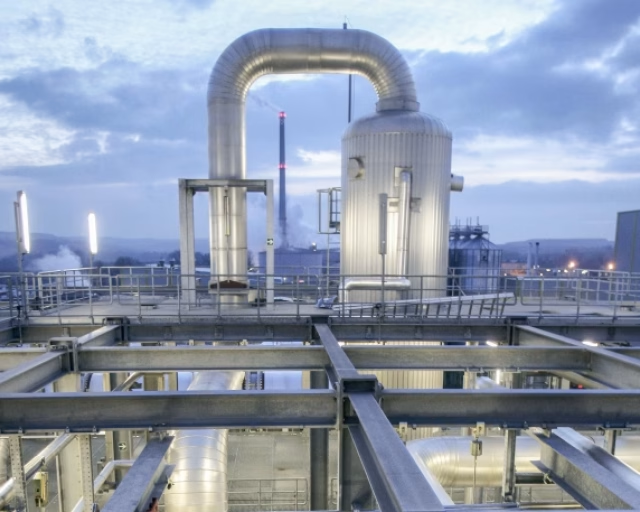
Climate-neutral energy solution for ethyl acetate plant
Read more -

Waste heat from a data centre keeps households warm
Read more -
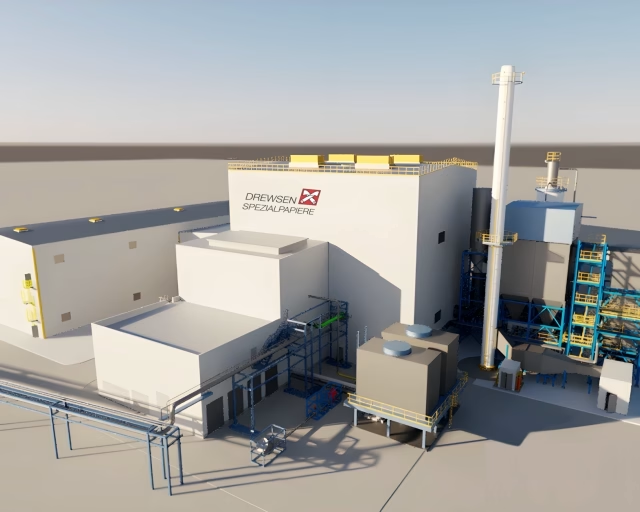
Powering a paper mill with straw and waste wood
Read more -

Geothermal energy powersnew residential district in Bayreuth
Read more -
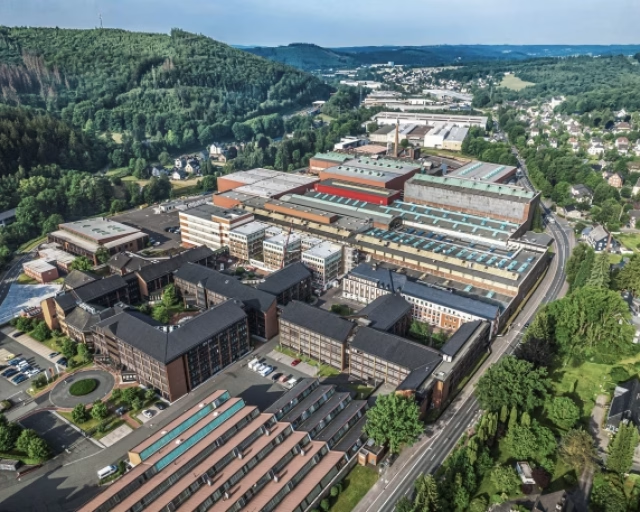
Unique power-to-heat system at German metallurgical site
Read more -
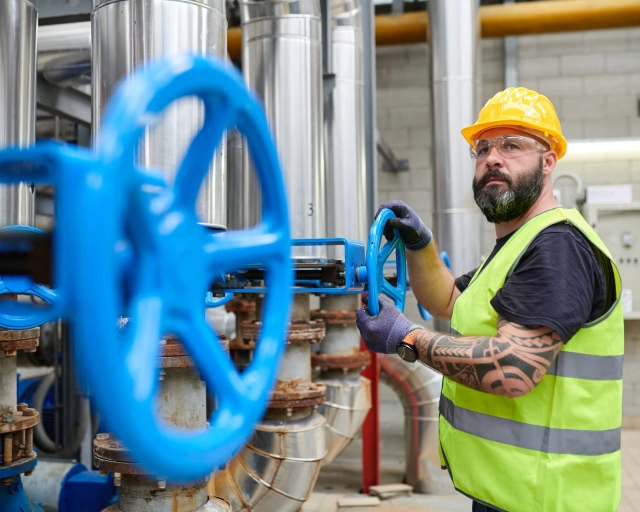
Recovered waste heat warms 5,000 households
Read more